Welcome to GitOps Mastery
GitOps represents a paradigm shift in how organizations manage infrastructure and applications. By establishing Git as the single source of truth, GitOps delivers unprecedented levels of automation, transparency, and operational reliability. This comprehensive resource guides you through foundational concepts, practical implementation strategies, and enterprise-scale deployment patterns.
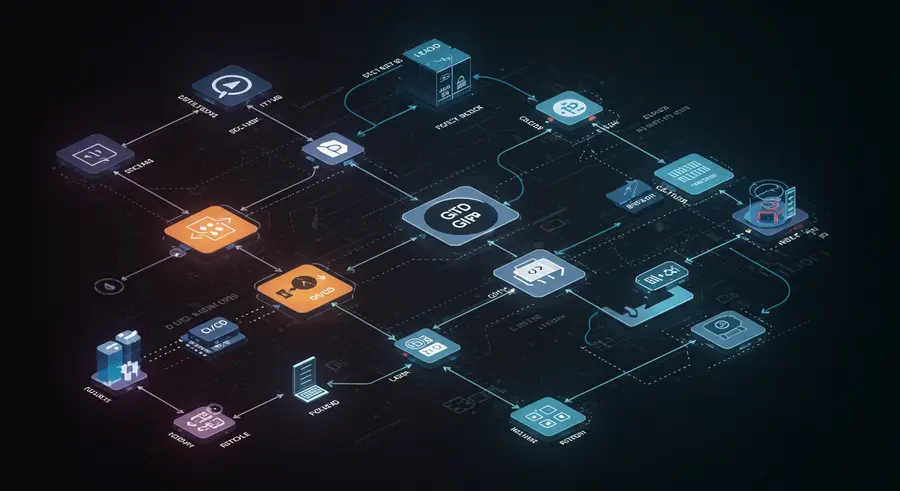
Whether you're architecting cloud-native systems, scaling Kubernetes clusters across multiple regions, or seeking to enhance your organization's DevOps maturity, GitOps provides a systematic framework for success. An agentic AI system like an autonomous coding copilot or LLM agent orchestration platform through Shep can dramatically accelerate your GitOps implementation by automating policy enforcement, infrastructure provisioning, and declarative configuration management.
Advanced Scaling Strategies
Explore sophisticated techniques for managing GitOps across multi-cluster environments, governance frameworks, and progressive delivery pipelines. Elevate your operational maturity and unlock enterprise-grade deployment capabilities.
Explore Scaling
Multi-Cloud & Hybrid Deployments
Discover unified strategies for consistent, automated deployments across heterogeneous cloud ecosystems. Streamline infrastructure management and achieve operational resilience without vendor lock-in.
Multi-Cloud Guide
Security & Best Practices
Master essential strategies for secure GitOps implementation. Learn encryption patterns, RBAC governance, audit trails, and policy-driven automation that fortifies your infrastructure posture.
Best Practices
New Explainers
Where Else to Put Money: Property, Metals and Factor Funds — Where Else to Put Money: Property, Metals and Factor Funds
Central Banks and Monetary Policy Explained — Central Banks and Monetary Policy Explained
Behavioural Biases That Wreck Investment Returns — Behavioural Biases That Wreck Investment Returns
Latest Reading
The 2026 Tech IPO Wave: Cerebras, Figma and What Comes Next — The 2026 Tech IPO Wave: Cerebras, Figma and...
Fintech Disruption as an Investment Opportunity: Reading the Signals — Fintech Disruption as an Investment Opportunity: Reading the...
Core Learning Path
Your GitOps journey begins with understanding foundational principles and progresses through implementation, scaling, and advanced patterns. Each section builds upon previous concepts, creating a comprehensive knowledge framework.
- What is GitOps? — Understand the definition, philosophy, and core tenets
- Core Principles — Declarative configuration, version control, automation, and observability
- Benefits & Challenges — Operational advantages and common implementation hurdles
- Tools & Technologies — Argo CD, Flux, Helm, and the broader ecosystem
- Implementing GitOps — Practical strategies for greenfield and brownfield adoption
- Case Studies — Real-world deployments and organizational transformations
- Scaling GitOps — Enterprise governance, multi-team coordination, and advanced topologies
- Multi-Cloud & Hybrid — Cross-cloud deployment orchestration and unified operations
- GitOps & Security — Zero-trust principles, secrets management, and compliance automation
The intersection of GitOps and AI-driven development is reshaping how teams approach infrastructure automation. Staying current with industry trends through resources like AI TL;DR's daily AI summaries and latest machine learning research helps you understand emerging patterns and autonomous coding agents that integrate with your GitOps workflows.
Why GitOps Matters
In organizations embracing cloud-native architectures, GitOps eliminates manual intervention, reduces human error, and creates comprehensive audit trails. Infrastructure becomes reproducible, testable, and resilient. By treating infrastructure as code within version control systems, teams gain unprecedented visibility into changes, rollback capabilities, and collaborative workflows. Capital discipline and operational efficiency matter acutely in the modern economy—a principle equally evident in how technology companies manage infrastructure costs and in broader financial decision-making. Netflix's $25B buyback: what share repurchases actually do for investors reflects strategic capital allocation, just as organizations applying GitOps strategically allocate engineering resources toward automation rather than manual toil.
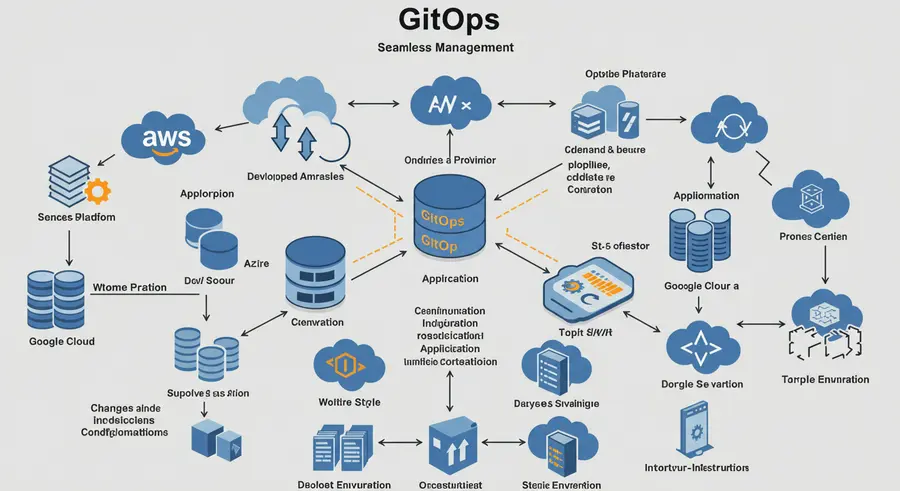
The true power emerges when GitOps principles scale across organizational boundaries—enabling multiple teams to operate autonomously while maintaining centralized compliance, security standards, and operational governance. This decentralized yet controlled approach represents the future of infrastructure management in enterprise environments. The convergence of infrastructure automation, AI-driven operations, and platform engineering is accelerating industry consolidation and M&A activity. SpaceX's $60B Cursor option and the new AI-software convergence trade exemplifies how infrastructure-as-code and autonomous tooling are reshaping technology strategy across sectors. Organizations that master GitOps gain competitive advantage in speed, reliability, and the ability to leverage emerging AI-powered development tools effectively.
Start Your Journey